Well General Practice has begun to settle into a new year of shifting targets, altered priorities and 'initiatives' to change the service for the better!
Sadly for front-line service, no-one seems to have altered the increasingly dependant culture in society to seek advice for any potential ill, woe, grievance or disappointment that does not resolve within minutes.
My own medical degree, 6 years post graduate training and regular updating is no longer the main underpinning of front-line practice. It would probably have been beneficial to more presenting patients had I done a combined Dentistry and Social Work degree!
But for all patients registered with my Practice aged over 75, help is at hand with new requirements in the GP contract - being allocated a nominated and accountable GP. (By June 2014 - so Record Access relegated AGAIN as a priority.)
As one of my trusted colleagues put it to me this week - "I do think sometimes politician’s think a bit of spin will solve the world. What do they think GPs have been doing for 50 years but providing personal care to their patients. As if a “nominated accountable GP” will suddenly make everyone well!"
For an average practice like my own this causes unexpected challenges. As the longest serving partner but with a part-time commitment, I have a proportionally larger share of patient for whom I am recorded as the 'usual GP'. In fact to achieve an equitable (and manageable) share I will have to inform 149 patients that 'another' GP is allocated as responsible and accountable for them. Perhaps not a way to enhance my reputation and build long term relationships - but without this sharing of responsibility a large slice of my clinical availability will be swallowed by this worthy initiative.
But perhaps I am 'old-fashioned' - I have always felt professionally responsible and accountable for patients on my practice list - and paid Medical Defence fees accordingly. New directives do not improve capacity for my Practice, in fact they tend to restrict our freedom to prioritise attention on those in greatest need (there are some very fit, well and independent over 75's!).
The law of unintended consequences revealed again?
Peter S.
Thursday, 24 April 2014

Tuesday, 4 March 2014
Difficult times….
No Blog entries for months - has he lost interest, faith, his password or retired?
Well sometimes when things go quiet it is because lots is happening, and sometimes there is just so much confusion no-one has a clue what is going on.
In the front-line world of General Practice the 'demand' for service continues to increase at a frightening rate. EVERYONE is queueing up to land more work at the door, mailbox or 'e-inbox' of General practice. These are daunting, fraught and dangerous times, with no clear end in sight.
The press remains schizophrenic in attitude to NHS services, on one hand 'blasting' the publicised high profile failings, then on the other hand fiercely defending a National Treasure. Clearly part of the long run up to a General Election next year where Health will be a political battle ground.
So what is happening in a 'real' GP surgery, trying to find solutions on a daily basis and deliver a sustainable service? Well we have far too much on to spend any meaningful time to develop on-line services. Even basic transaction support becomes questionable when we have no spare capacity, so harsh but practical decision are made to support any service we feel helps capacity and safety, but to abandon those who do not seem to us to help or at least prove resource neutral.
Our decision:
Transactions actively supported for online medication requesting and appointment reminders
Transactions retained for appointment booking and cancellation
No active support (or withdrawal) for patient access to records
If we are in the vanguard of 'early adopters' for Record Access, what does this type of decision indicate for other practices? Well, we suspect that few will actively promote online activity that costs time, effort and money. We are well aware of the claims and reports by 'enthusiasts' over efficiency to the business, but we have NO capacity or resource to get that far - even if we believed these claims were realisable outside enthusiast practices. Transactions for appointment booking seem to have little value to patients giving 24/7 access when we have 10 days to wait for a free appointment! SO the point is that online interaction we currently have does not add to capacity, and some fear it may fuel unrealistic expectation.
For those who are sceptical of the claims from General Practice I can only report my real-world experience of the last Friday and Monday in GP land. Both were days 'on-call', triaging and seeing those with perceived urgent problems (medical, surgical, dental, social, financial, administrative etc etc), both lasted from 8am to beyond 7pm. No coffee breaks or lunch, and an intense run of 'decision taking' and 'risk assessing'. Having been 'dusted' around by cleaners on Monday evening at 7:20 pm I gave up, to complete paperwork the following day in the early morning before 'work'. Not sustainable or safe.
So the new GP contract from april 2014 promises to incentivise/require GP practices to interact in more modern online ways. But as a service we are close to breaking point in a way none of us long serving providers have seen before. If GP service collapses so does the rest of the NHS. Forcing Online interaction will not be the final straw, but perhaps there are other greater priorities?
Difficult times…..
Well sometimes when things go quiet it is because lots is happening, and sometimes there is just so much confusion no-one has a clue what is going on.
In the front-line world of General Practice the 'demand' for service continues to increase at a frightening rate. EVERYONE is queueing up to land more work at the door, mailbox or 'e-inbox' of General practice. These are daunting, fraught and dangerous times, with no clear end in sight.
The press remains schizophrenic in attitude to NHS services, on one hand 'blasting' the publicised high profile failings, then on the other hand fiercely defending a National Treasure. Clearly part of the long run up to a General Election next year where Health will be a political battle ground.
So what is happening in a 'real' GP surgery, trying to find solutions on a daily basis and deliver a sustainable service? Well we have far too much on to spend any meaningful time to develop on-line services. Even basic transaction support becomes questionable when we have no spare capacity, so harsh but practical decision are made to support any service we feel helps capacity and safety, but to abandon those who do not seem to us to help or at least prove resource neutral.
Our decision:
Transactions actively supported for online medication requesting and appointment reminders
Transactions retained for appointment booking and cancellation
No active support (or withdrawal) for patient access to records
If we are in the vanguard of 'early adopters' for Record Access, what does this type of decision indicate for other practices? Well, we suspect that few will actively promote online activity that costs time, effort and money. We are well aware of the claims and reports by 'enthusiasts' over efficiency to the business, but we have NO capacity or resource to get that far - even if we believed these claims were realisable outside enthusiast practices. Transactions for appointment booking seem to have little value to patients giving 24/7 access when we have 10 days to wait for a free appointment! SO the point is that online interaction we currently have does not add to capacity, and some fear it may fuel unrealistic expectation.
For those who are sceptical of the claims from General Practice I can only report my real-world experience of the last Friday and Monday in GP land. Both were days 'on-call', triaging and seeing those with perceived urgent problems (medical, surgical, dental, social, financial, administrative etc etc), both lasted from 8am to beyond 7pm. No coffee breaks or lunch, and an intense run of 'decision taking' and 'risk assessing'. Having been 'dusted' around by cleaners on Monday evening at 7:20 pm I gave up, to complete paperwork the following day in the early morning before 'work'. Not sustainable or safe.
So the new GP contract from april 2014 promises to incentivise/require GP practices to interact in more modern online ways. But as a service we are close to breaking point in a way none of us long serving providers have seen before. If GP service collapses so does the rest of the NHS. Forcing Online interaction will not be the final straw, but perhaps there are other greater priorities?
Difficult times…..
Tuesday, 3 September 2013
Continuity & Personal Service
No additions/comments/updates over the summer - pretty typical of the 'behaviour' in GP practices. With more staff on holiday, those who remain are busy with the routine work and NOT with making heroic plans to deal with the expected winter pressures, the next rush of central developments and demands, and the ongoing barrage of NHS criticism.
So what has been happening in our quiet attempts to improve the range of options for digital interaction with patients?
Firstly there is a slow, steady and sustained trickle of new registrations for Online service registration. No great demand for Record Access, but significant interest in appointment and repeat medication ordering. And we believe that some basic publicity has helped!

Second observation is the realisation that my system provider had failed to repair SMS appointment reminders to patients AND continues to report in the record that an SMS reminder has been sent!
Does not inspire confidence that future digital interaction (upon which we plan to increasingly rely), is yet robust enough?
But my most important reminder of priorities happened during a seemingly ordinary 10 minute consultation yesterday, and it has lifted my spirits at the end of the summer holiday.
The consultation in question was with a patient I have known for most of my 25 years as a GP. I was reminded that 22 years previously to the day, I had attended urgently at his home to discover a classical presentation of a 'heart attack'. At the time I carried a wide range of emergency drugs (before Paramedics existed in my area) including morphine (now rarely carried thanks to a former colleague in Hyde) which relieved the urgent situation before departure to hospital. The intervening years have seen a range of interventions, surgical and pharmacological, but have probably all contributed to a long and active retirement.
I was thanked gracefully and politely, for myself and my surgery continuing to 'care' and provide a service that is appreciated daily.
So for me this is a reminder that care, compassion, responsibility and continuity of care have not started because of recent 'scandals' and 'painstaking reports', or arrived by computerised protocol. They have existed throughout my working life, in all care locations and from all members of the caring and support teams I have worked with. The failures remain the minority exceptions - often when the 'needs of the system' are allowed to override the judgement of those at the point of care.
I must remember that in ANY of my attempts to open up more digital communication and interaction opportunity, compassion is not delivered by a computer, or 'care' by an algorithm alone. It is those who run the systems that must introduce technology that supports rather than detracts from these qualities. Quite a challenge ahead!
Peter S.
Thursday, 1 August 2013
Memories
Time flies - and medical students grow into doctors who (sometimes) grow into respectable senior members of the profession.
I look back with rose-tinted spectacles, as on this day 30 years ago, I am reminded that I stepped out onto the ward in a starched white hospital coat as a 'proper' junior doctor.

The unsuspecting patients in Birmingham were not warned or prepared as I assumed responsibility for decision making on a whole new level.There will clearly be differences with the new generation, who may start better prepared, better supervised, less tired and better trained to interact with fellow human beings, but I suspect much of the excitement and trepidation is undiminished.
The 'digital' junior doctor may well not be burdened with pockets full of reference material, may 'clock-off' without a 24 hour duty shift, but will still need to practice and refine what they have started to learn over 5 years about interaction with patients, relatives and colleagues in healthcare. No amount of 'virtual' practice can match real life in remaining a steep learning curve.
So my advice to them is to listen, and engage the brain and heart when dealing with people.
Technology is fun, and essential to use, but can only compliment the essential care, compassion and personal touches that nurses, doctors and all our colleagues provide.
Good luck, and learn quickly. I need you to be looking after me sooner than you think!
Peter S
I look back with rose-tinted spectacles, as on this day 30 years ago, I am reminded that I stepped out onto the ward in a starched white hospital coat as a 'proper' junior doctor.
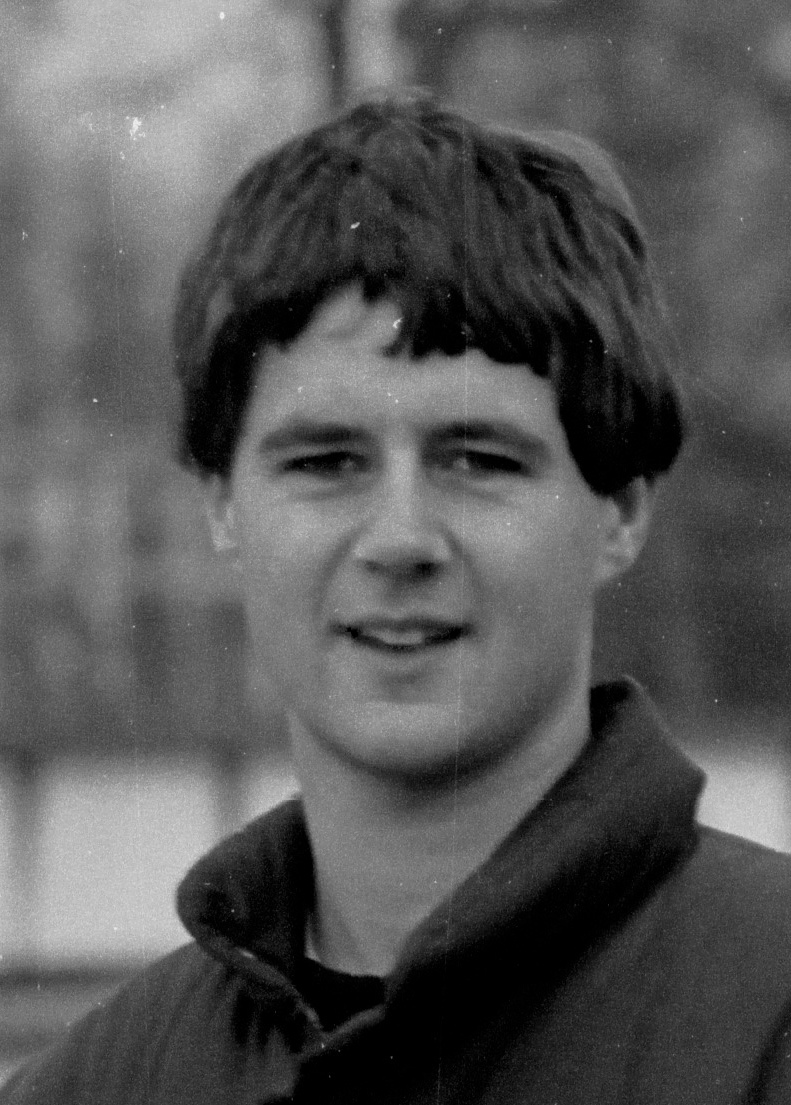
The unsuspecting patients in Birmingham were not warned or prepared as I assumed responsibility for decision making on a whole new level.There will clearly be differences with the new generation, who may start better prepared, better supervised, less tired and better trained to interact with fellow human beings, but I suspect much of the excitement and trepidation is undiminished.
The 'digital' junior doctor may well not be burdened with pockets full of reference material, may 'clock-off' without a 24 hour duty shift, but will still need to practice and refine what they have started to learn over 5 years about interaction with patients, relatives and colleagues in healthcare. No amount of 'virtual' practice can match real life in remaining a steep learning curve.
So my advice to them is to listen, and engage the brain and heart when dealing with people.
Technology is fun, and essential to use, but can only compliment the essential care, compassion and personal touches that nurses, doctors and all our colleagues provide.
Good luck, and learn quickly. I need you to be looking after me sooner than you think!
Peter S
Wednesday, 3 July 2013
Expectation v Capacity
It is very hard sometimes being part of such a negative, defensive, pessimistic and cautious profession - or so the 'media' currently paints us in General Practice.
For those with an interest, there is an additional thought provoking publication from the 'Medical Protection Society' over on-line interaction and relationships between doctors and patients - worth consideration.
MPS Guidance
In particular I am concerned of the mis-match between patient expectation on routine response to e-mail enquiries, and the attitudes and capacity in General Practice.
Simply put - more communication channels from the public to General Practice will add to demand and workload unless other work, communications and processes are discontinued. I believe most practices are currently working at or beyond safe capacity, so yes, we are cautious with good reason.
Peter S.
For those with an interest, there is an additional thought provoking publication from the 'Medical Protection Society' over on-line interaction and relationships between doctors and patients - worth consideration.
MPS Guidance
In particular I am concerned of the mis-match between patient expectation on routine response to e-mail enquiries, and the attitudes and capacity in General Practice.
Simply put - more communication channels from the public to General Practice will add to demand and workload unless other work, communications and processes are discontinued. I believe most practices are currently working at or beyond safe capacity, so yes, we are cautious with good reason.
Peter S.
Tuesday, 14 May 2013
What to do with the 'Information'......
I am going to attend a meeting this week to learn more about 'Information for Commissioning'.
What can Commissioners ask for or expect, what can they do with it and how will it change things?
It should be very interesting and relevant as we glide smoothly (?) into the era of CCGs.
But perhaps I have been living in a different universe from other Healthcare providers for the past 10 years or more. We have no end of data available already, we have 'grown-up' with local comparisons and 'bench-marking', we look in detail at prescribing, referrals, length of stay, urgent admissions, 'frequent-flyers' etc etc. What is so new in the ambitions now being expressed and the expectation?
Well - being the grey-haired sceptic I am, a few observations flow:
SO the message from a small healthcare organisation with a track record of reflection and action on comparative data is simple:
In Commissioning 'learning' Healthcare Organisations at all levels, NHS England and CCGs are not just asking for delivery, they must resource practitioner and organisational level reflective analysis.
In my 'bubble' of digital Primary Care I am nervous that there will be a strong Top Down temptation to 'name-and-shame' those who are slower to embrace policy aims at the front-line, as revealed by National reporting. In a forward looking 'learning organisation' we would help each other to understand the data and the opportunities for change and improvement these reveal. To turn the sticks into carrots... the real power of data......
Peter S.
What can Commissioners ask for or expect, what can they do with it and how will it change things?
It should be very interesting and relevant as we glide smoothly (?) into the era of CCGs.
But perhaps I have been living in a different universe from other Healthcare providers for the past 10 years or more. We have no end of data available already, we have 'grown-up' with local comparisons and 'bench-marking', we look in detail at prescribing, referrals, length of stay, urgent admissions, 'frequent-flyers' etc etc. What is so new in the ambitions now being expressed and the expectation?
Well - being the grey-haired sceptic I am, a few observations flow:
- The availability of data to the NHS is far from new - we have always had lots, but seem to be short of time and resource (and sometimes the will) to analyse & understand it, to identify areas of unwarranted variation and to act upon these.
- The data alone does not drive change - despite all the political ambition and rhetoric.
- The commitment and resource to continually collate, analyse and reflect upon collected data and the information it reveals needs to be embedded within every care AND Commissioning organisation.
- When finances get tighter - we tend to cut resource to analytical staff & processes and 'assume' wrongly that the work can be absorbed into daily activity.
SO the message from a small healthcare organisation with a track record of reflection and action on comparative data is simple:
- Priorities what you look at and start small
- Be prepared to learn by comparison with peers
- Commit resource to data analysis as an administrative and clinical function
- Make changes as a team AFTER analysis
- Review future performance to check desired outcomes
In Commissioning 'learning' Healthcare Organisations at all levels, NHS England and CCGs are not just asking for delivery, they must resource practitioner and organisational level reflective analysis.
In my 'bubble' of digital Primary Care I am nervous that there will be a strong Top Down temptation to 'name-and-shame' those who are slower to embrace policy aims at the front-line, as revealed by National reporting. In a forward looking 'learning organisation' we would help each other to understand the data and the opportunities for change and improvement these reveal. To turn the sticks into carrots... the real power of data......
Peter S.
Monday, 6 May 2013
Well done EMIS
I am not normally known to sign the praises of computer system suppliers - even the one I have used for many years. But this week the company released a small upgrade to the search and audit function that means I can find out much more about how many patients on my list are registered and using the on-line interaction services.
So why is this so important to me?
Well, very simply, without looking at the statistics of patient interaction I may be complacent assuming we have done all we need to meet the demands for on-line interaction, or that such a function is only used by a tiny minority.
So this month my surgery has a registered list of 9,277 patients. Of these 1,329 have an activated account with the theoretical ability to access on-line services such as medication and appointment ordering - accounting to about 14% of the surgery list.
A further 1,630 have had a PIN issued giving them the opportunity to complete registration, but have not yet chosen to complete the process (a further 18%), leaving 6,318 using only traditional services.
There are a few interesting features in the 'activated user' group. 114 accounts are for children under 10, so clearly some parents see advantages of registering their children. In general more females are registered for the service, except in the 60-69 and 70-79 age ranges.
So overall 2 cheers for EMIS who have responded to my request to add search functionality - but they could do much more...
I need to have regular reports produced, without having to devise and build and run hem myself, and I suspect all other practices will want the same with 2013-14 DES targets. More importantly to make an impact on demand at the desk and on the phone I need a more detailed breakdown of how many appointments are booked on-line and repeat scripts ordered on a monthly basis - and who are users of Medical Record Access and messaging.
This information will help the practice to manage workload AND give a better understanding how our services are used and could be developed.
And all GP IT system suppliers are in the same boat. The systems contain highly useful information - just help us as users to get at it please in a way that makes sense.
PS
So why is this so important to me?
Well, very simply, without looking at the statistics of patient interaction I may be complacent assuming we have done all we need to meet the demands for on-line interaction, or that such a function is only used by a tiny minority.
So this month my surgery has a registered list of 9,277 patients. Of these 1,329 have an activated account with the theoretical ability to access on-line services such as medication and appointment ordering - accounting to about 14% of the surgery list.
A further 1,630 have had a PIN issued giving them the opportunity to complete registration, but have not yet chosen to complete the process (a further 18%), leaving 6,318 using only traditional services.
There are a few interesting features in the 'activated user' group. 114 accounts are for children under 10, so clearly some parents see advantages of registering their children. In general more females are registered for the service, except in the 60-69 and 70-79 age ranges.
So overall 2 cheers for EMIS who have responded to my request to add search functionality - but they could do much more...
I need to have regular reports produced, without having to devise and build and run hem myself, and I suspect all other practices will want the same with 2013-14 DES targets. More importantly to make an impact on demand at the desk and on the phone I need a more detailed breakdown of how many appointments are booked on-line and repeat scripts ordered on a monthly basis - and who are users of Medical Record Access and messaging.
This information will help the practice to manage workload AND give a better understanding how our services are used and could be developed.
And all GP IT system suppliers are in the same boat. The systems contain highly useful information - just help us as users to get at it please in a way that makes sense.
PS
Subscribe to:
Posts (Atom)